
MIL-STD-810G
The U.S. military standard 810G covers 24 tests including shock, vibration, temperature, humidity, altitude and rain — defining an outdoor military-grade level of ruggedness.
Close the loop between people · instruments · data · decisions right at the site. Breaking free from the traditional lab-and-server-room model, FieldOps moves capture, compute, analysis, visualization and decision-making to where the mission happens. Its L1 / L2 / L3 three-tier architecture delivers the full chain from "individual work → team collaboration → system-level execution".
Turn the field from the end of the chain into the starting point of decisions, so testing, debugging, consultation and command all happen instantly where the mission is.
Field workers shift from the "end of execution" to the "entry point of decisions". The equipment amplifies individual capability so frontline staff can judge and act fast.
Rugged tablets, portable workstations and multi-screen control nodes: the site becomes the workstation and the instrument becomes the gear, with no trip back to the lab.
Capture, storage, transmission and uplink in one; multi-link redundancy (4G/5G/Wi-Fi 6/BeiDou/satellite) keeps data online at all times.
The site is the decision point. By "moving command forward" — bringing analysis, consultation and review from the server room to where the mission happens — efficiency multiplies.
A Field Operations Terminal is an industrial terminal designed for mobile, rugged and multi-link connectivity scenarios. Unlike an ordinary laptop or industrial tablet, a field operations terminal must meet three core requirements at once:
MIL-STD-810G shock resistance + full-unit IP65 dust and water protection + 1–1.5 m drop resistance, ready for mobile work outdoors, in vehicles and at emergency sites.
4G / 5G + Wi-Fi 6 + BeiDou / GPS + LoRa multi-link redundancy — automatic failover when any channel drops keeps mission-critical traffic uninterrupted.
An 8–12 h main battery plus a hot-swappable spare lets the unit run 24–48 h non-stop during field or emergency deployment.
A three-tier equipment system that scales step by step — choose the tier that matches your mission size and collaboration complexity.
Handheld / rugged tablet / portable industrial terminal
Foldable desktop work platform + acquisition + compute
Single / dual / triple-screen deployable field system node
Handheld / rugged tablet / portable industrial terminal — start working the moment you arrive
 FieldOps™ L1 rugged tablet / handheld terminal
L1 is the "personal gear" of the FieldOps system. A 7"–10" rugged tablet or handheld industrial terminal integrating barcode scanning, RFID, thermal imaging and intercom modules; MIL-STD-810G drop resistance, IP65 dust and water protection and hot-swap dual-battery endurance let frontline staff start inspection, debugging, testing and verification the moment they reach the site.
Foldable desktop work platform + acquisition + compute — reach on-site conclusions through multi-device commissioning
 FieldOps™ L2 portable workstation / instrumentation
L2 is the "team gear" of the FieldOps system: a portable work platform integrating 15.6"–17" dual screens, an industrial computing unit, multi-channel data acquisition and instrument bridging. A single unit handles multi-device commissioning, parameter validation, data capture and analysis on site, producing sign-off-ready conclusion documents on the spot — eliminating the old "analyze it back at the office" round-trip.
Single / dual / triple-screen deployable field system node — bring the command post to where the mission happens
 FieldOps™ L3 triple-screen portable command node
L3 is the "system-level gear" of the FieldOps system. The Field-Integrated Decision & Control Platform (FIDCP) is a single/dual/triple-screen deployable field system node that combines multi-link connectivity, multi-source data aggregation, AI inference, visual command and cross-system control. It compresses the capability of a traditional command vehicle or command post into a single briefcase — completing situation assessment, joint decision-making, on-site command and after-action logging right where the mission happens.
From public networks to private networks to Tiantong satellite, intelligent multi-channel switching ensures field work never stalls because a single link drops.
Dual-SIM redundancy across the three carriers, 5G NSA / SA dual mode
2.4 / 5 / 6 GHz tri-band, high-speed backhaul to plant / camp APs
Multi-mode satellite positioning, optional RTK centimeter-level accuracy
Tiantong / Inmarsat / Iridium fallback where there is no ground infrastructure
Low-power long-range sensor-network aggregation over license-free private bands
Multi-link SD-WAN routing that auto-selects by latency and packet loss
FieldOps™ strictly follows international industrial, protection, safety and reliability standards, each mapping to a hard requirement on the industrial field.
The U.S. military standard 810G covers 24 tests including shock, vibration, temperature, humidity, altitude and rain — defining an outdoor military-grade level of ruggedness.
IP65 against dust and water jets from all directions; select models offer IP67 short-term immersion. Suited to rain, snow, dust and coastal environments.
European rail standard EN 50155 — vibration, power-fluctuation and temperature-cycling requirements for onboard / train equipment.
1.0–1.5 m drops onto concrete with no functional damage, compliant with the U.S. military 810G Method 516.6 drop test.
Wide-temperature operation for military, emergency and outdoor use, deployable without air conditioning. Extreme versions reach -40°C.
Compliant with EU LVD + EMC + RED (Radio Equipment Directive) for export to European emergency and defense projects.
Integrated BeiDou + GPS dual-mode positioning — BeiDou-compliant for domestic military / government projects and GPS-compatible for international ones.
Triple CCC + FCC + RoHS certification for universal deployment across domestic and overseas projects.
Drawn from real project experience: recommendations for 4 common scenarios — challenges, solutions and recommended models at a glance.
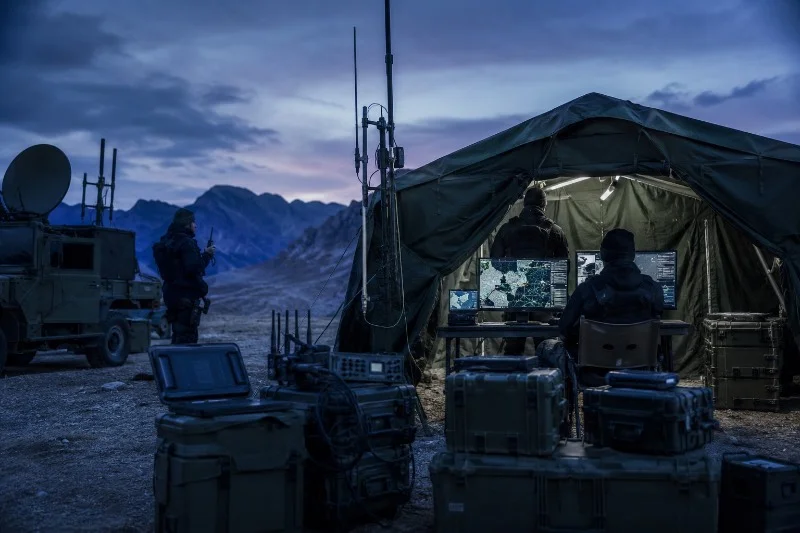
Challenge: Emergency rescue needs three screens working in parallel (map + video + commands) + 4G/5G + satellite + BeiDou positioning + 8h+ runtime, and must survive drops, rain and dust without going down.
Solution: Choose the FieldOps L2 / L3 portable workstation / FIDCP platform (dual / triple-screen portable command console) + multi-link redundancy + hot-swap batteries.
Recommended: L2 Portable Workstation · L3 FIDCP Triple-Screen Command
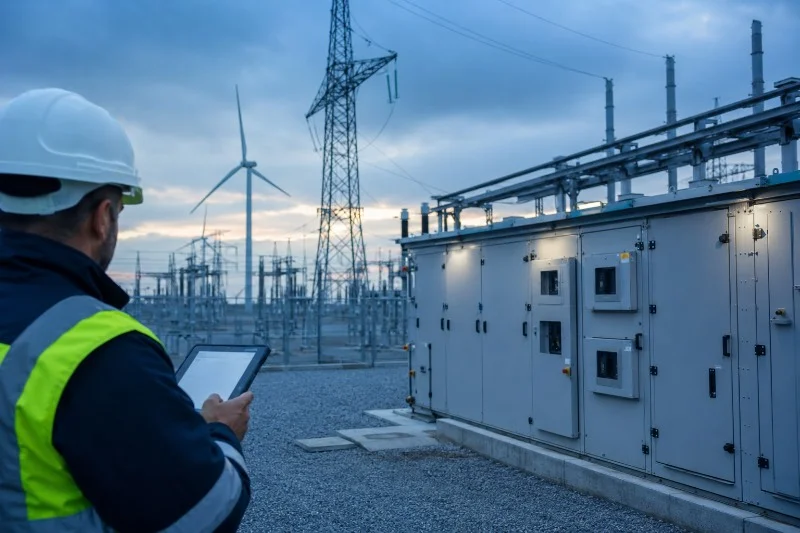
Challenge: Grid / wind / oil-and-gas inspection requires mobile work + photo capture + form upload. Field environments bring cold, heat, rain and dust, demanding IP65 + wide temperature + long runtime.
Solution: Choose the FieldOps L1 tool computer (rugged laptop / tablet) + 4G/5G + BeiDou + 8h+ runtime + IP65.
Recommended: L1 Tool Computer

Challenge: Logistics, delivery and emergency vehicles need EN 50155 onboard vibration certification + 9–36V automotive-grade wide input + high-temperature tolerance (60°C+ inside cabins in summer).
Solution: Choose the FieldOps L1 / L2 rugged in-vehicle terminal + EN 50155 vibration testing + automotive-grade power + BeiDou + 5G.
Recommended: L1 Tool Computer · L2 Portable Workstation
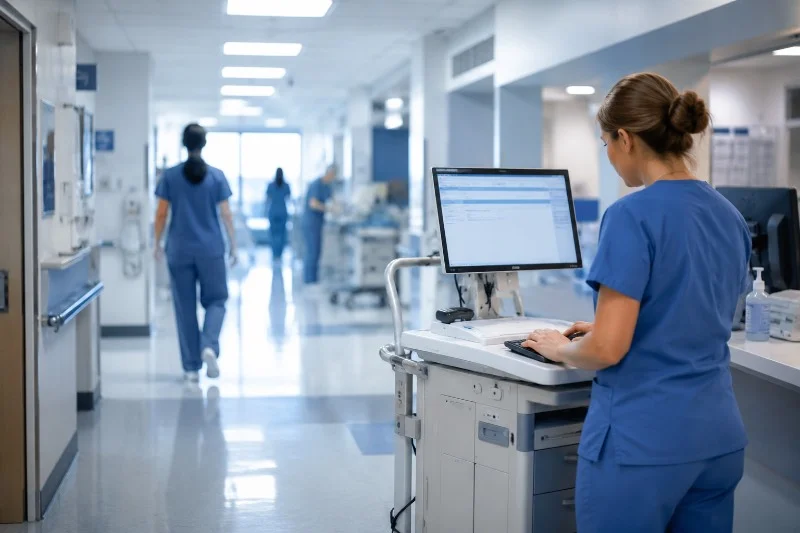
Challenge: Battlefield and first-response scenarios need dual-band satellite communication + emergency button + long runtime + drop resistance. Suited to hospital ambulances, armed police / border defense and maritime rescue.
Solution: Choose the FieldOps L3 FIDCP integrated control platform (satellite communication + multi-link + rugged structure).
Recommended: L3 FIDCP Platform
Common questions about FieldOps™, industrial computing selection and industrial field deployment.
MIL-STD-810G is a U.S. military standard of 24 tests covering shock, vibration, temperature, humidity, altitude and drop — an overall outdoor military-grade level. IP65 (IEC 60529) only rates dust and water ingress. FieldOps passes both, delivering true military / emergency-grade ruggedness.
Domestic government / military / localization projects require BeiDou (self-controllable + short-message communication). International projects use GPS / Galileo / GLONASS. FieldOps runs both modes concurrently by default (BeiDou + GPS), receiving two positioning streams at once for global use and higher accuracy.
FieldOps integrates a multi-mode communications module (4G/5G + Wi-Fi 6 + BeiDou, with satellite on select models). The EdgeSync™ edge execution engine monitors every channel and fails over to a backup link within milliseconds when the primary degrades. In weak 5G areas it switches to 4G or satellite, keeping mission-critical traffic (maps / video / commands) uninterrupted.
FieldOps L2 / L3 main batteries last 8–12 hours; with hot-swap spares they run continuously for 24–48 hours without powering down, covering field emergencies, rescue and long-range inspection. The L1 tool computer ships with one battery rated at 8h+.
FIDCP stands for Field Integrated Decision & Command Platform. It is the top FieldOps L3 configuration — a three-screen portable command console (one main unit + two extension screens that can independently show maps / video / commands), integrating 4G/5G/BeiDou/satellite. It is the flagship product for emergency rescue and defense command.
The standard FieldOps series operates from -20°C to 60°C. Extreme-cold versions (high-latitude military, high-altitude or Arctic use) require a custom wide-temperature upgrade to -40°C, using a low-temperature start-up heating film plus industrial-grade components. Please consult our sales engineers.
EN 50155 (railway / transit onboard standard): vibration + power fluctuation + temperature cycling. E-Mark / e1–e25 (EU automotive certification): road-vehicle EMC. FieldOps L1 / L2 ship with EN 50155 as standard, with E-Mark available on request. A 9–36V automotive-grade power input is supported across the range.
L1 Tool Computer: individual operators / inspection / field work in a rugged laptop or tablet. L2 Portable Workstation: dual-screen mobile command (in-vehicle + temporary workstation), shock- and vibration-resistant. L3 FIDCP Triple-Screen Command: the flagship emergency-command / battlefield decision center. Select by scenario, complexity and budget.
Tell us your mission scale (individual / team / command post), operating environment (indoor / field / maritime) and connectivity conditions, and our industrial solution engineers will respond within 24 hours with a matched L1/L2/L3 equipment configuration and a sample-evaluation plan.