CNC · NUMERICAL CONTROL · INDUSTRIAL PC

CNC Machine Tools
Industrial PC Integration Solutions

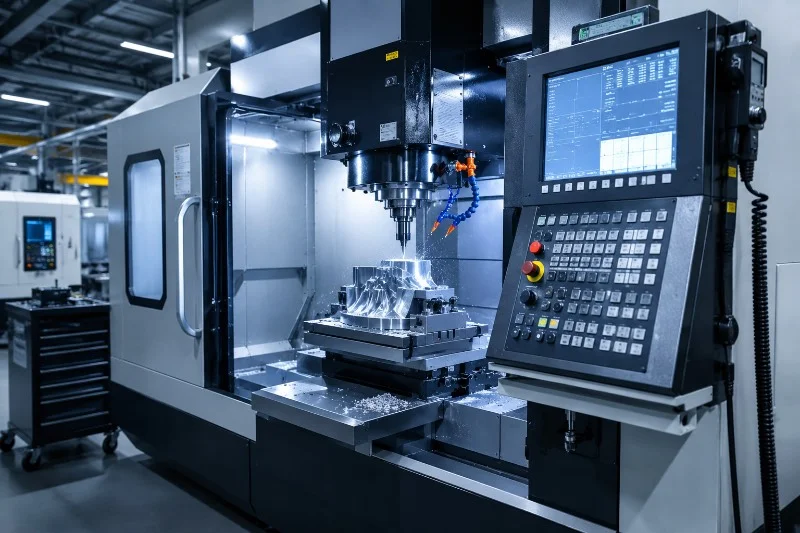
From the 1952 first NC milling machine to modern 5-axis machining centers, digital instructions have always been the underlying language of machine-tool motion. CESIPC industrial PCs are not a "performance node" — they are the foundational variable that determines the stability of the entire CNC system, delivering differentiated solutions for both CNC system manufacturers and machine-tool OEM builders.

EPC-102A industrial PC integrated into a 5-axis CNC machining center electrical cabinet CNC INDUSTRY
A BRIEF HISTORY

A Brief CNC History · Controlling Metal with "Data"

The world's first CNC machine — more accurately, NC (Numerical Control) — was born in the United States in 1952, an NC milling machine.

Key characteristics:

  • Controlled by punched paper tape
  • Machine motion strictly driven by coordinate commands
  • No manual feed involved

This moment is widely regarded as "the first time humans directly controlled machine-tool motion with digital data" — and the starting point of modern manufacturing.

1952 First NC Mill MIT + Parsons
Punched paper-tape NC mill
2025 5-Axis CNC + IPC Multi-axis motion + Real-time OS
Industrial PC + PCI/PCIe expansion
MODERN CNC ARCHITECTURE

The 4-Layer Architecture of Modern CNC Machine Tools

The industrial PC is not a peripheral — it is the foundational layer of the system architecture, working primarily in layers ② and ④.

Machine-Tool Mechanical Structure

  • Bed
  • Guideways
  • Ball Screws
  • Spindle
  • Tool Magazine (ATC)

CNC Control System Key IPC Position

  • Interpolation Algorithms
  • Coordinate System
  • Servo Control
  • Error Compensation
  • Control System Framework

Machining Process

  • Turning / Milling
  • Multi-Axis Machining
  • Cutting Tools
  • Process Parameters
  • Empirical Know-How

Software Workflow Key IPC Position

  • CAD → CAM → CNC
  • CAD (Computer-Aided Design)
  • CAM (Computer-Aided Manufacturing)
  • Post-Processing
  • G-Code Generation
SCENARIO 01

Scenario 1 · CNC System Manufacturers

Delivering a "system-level stability variable" to CNC system OEMs — the IPC is the runtime foundation of soft-CNC control platforms.

Typical System-Level Architecture

CNC Software / HMI
Real-Time / Quasi-Real-Time OS
Industrial PC (IPC Computing Platform)
PCI / PCIe Expansion Cards
Servo Drives / I/O / Machine Actuators

5 Core CESIPC Commitments in This Scenario

Stability & Determinism

What CNC systems are most sensitive to is not peak compute, but long-term timing consistency. From early design, CESIPC industrial PC platforms address:

  • CPU frequency stability and controlled scheduling
  • Interrupt and bus-occupancy impact on control loops
  • Eliminating sporadic jitter under continuous operation

This means — control precision will not drift due to random hardware behavior.

Motion Control + PCI/PCIe Consistency

CNC systems commonly rely on PCI / PCIe expansion cards: motion controllers, dedicated interface cards, FPGA modules. CESIPC platform selection and design emphasize:

  • Electrical integrity of expansion slots
  • Bus timing stability
  • Behavioral consistency across hardware batches

Enabling system OEMs to confidently freeze the platform after validation — no repeated regression testing required.

EMC Hardening + Industrial Robustness

CNC systems are usually deployed in high-noise machine-tool electrical cabinets. CESIPC industrial PC platforms specifically harden interference immunity against:

  • Servo drives
  • Variable-frequency drives (VFD)
  • High-frequency switching power supplies

Through custom power design, interface isolation, and structural layout — reducing control jitter, communication errors, and random reboot risks.

Lifecycle Management + Platform Freeze Strategy

CNC software validation cycles are significantly longer than general industrial applications. CESIPC supports:

  • Platform version freeze (CPU / Board / BIOS)
  • Long-term supply + predictable roadmap evolution

Allowing system OEMs to treat the hardware platform as a "validated system component" — not an unstable variable.

System-Level Validation Partnership

Rather than "serving a single short-term project", CESIPC prefers to:

  • Jointly perform platform-level validation with CNC system OEMs
  • Be integrated into the customer's system architecture as a reference or certified platform

Building a long-term, reusable hardware-system collaboration.

SCENARIO 02

Scenario 2 · Machine-Tool OEM Builders

Delivering "MES and supervisory systems" for machine-tool OEMs — the IPC is the core node of the data-acquisition and production-management layer.

1. The Customer's Role in the System

Machine-tool OEM builders typically:

  • Use a third-party CNC system (or partially in-house controller) as the control core
  • Implement HMI, MES integration, and machine networking independently or with a system integrator

In this scenario: IPC = the core node of the supervisory, data, and management layers.

2. Typical Application Functions

Machine Status Monitoring Process & Parameter Management Production Data Acquisition MES / ERP Integration Remote O&M / Diagnostics

3. CESIPC Fit

CESIPC industrial PCs and industrial panel PCs can be deployed respectively as:

  • Panel PC: Machine HMI and operator terminal
  • IPC: In-cabinet supervisory control and data node
  • Shared traits: Engineered for continuous 24/7 operation in industrial environments
ROLE DIVISION

IPC and Panel PC Roles in CNC Systems

In CNC system architectures, IPCs and Panel PCs typically work in cooperation — not as substitutes. The IPC handles control logic, data processing, and system stability; the Panel PC handles human-machine interaction and visualization.

CONTROL LAYER

IPC (Industrial PC)

For CNC control / supervisory systems

Typical Roles

  • PC-based CNC / soft-CNC control platform
  • CNC system runtime environment
  • Supervisory control, equipment coordination, data node

Form Factor Traits

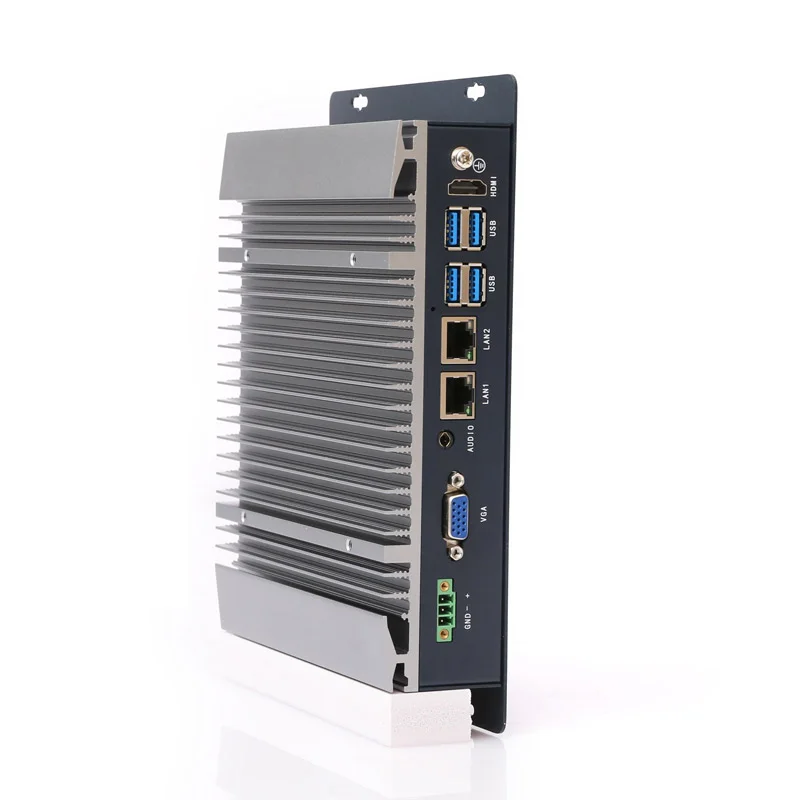
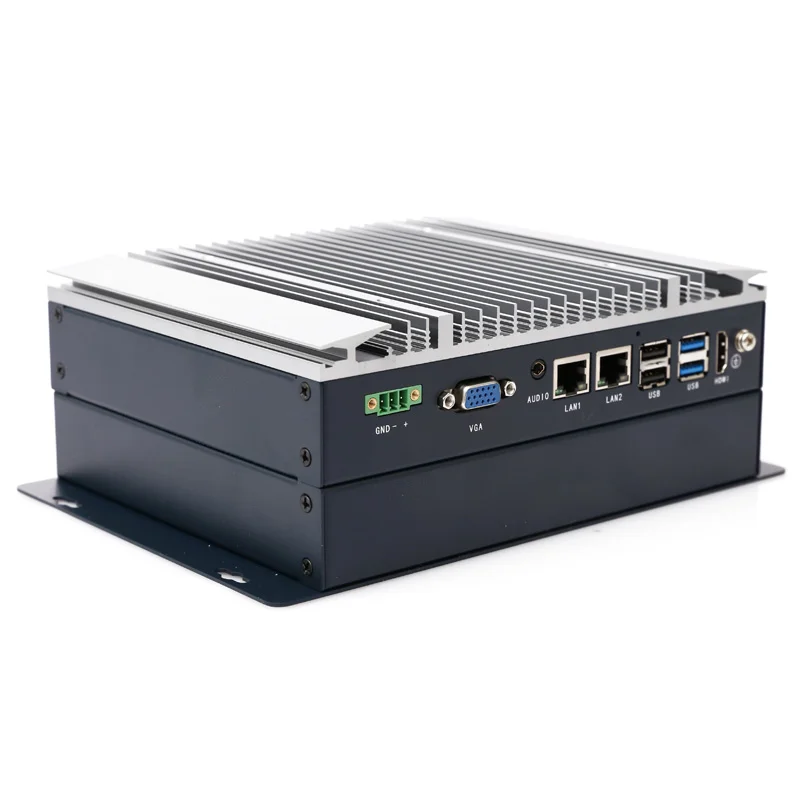
  • Industrial-grade fanless or low-speed-fan design — suited for in-cabinet 24/7 operation
  • Single-side centralized I/O layout — aligns with machine cable-routing logic
  • PCI / PCIe expansion (motion controllers / dedicated function cards)
  • Multi-LAN + multi-COM interface combinations
  • Platform version freeze + long-term supply
HMI LAYER

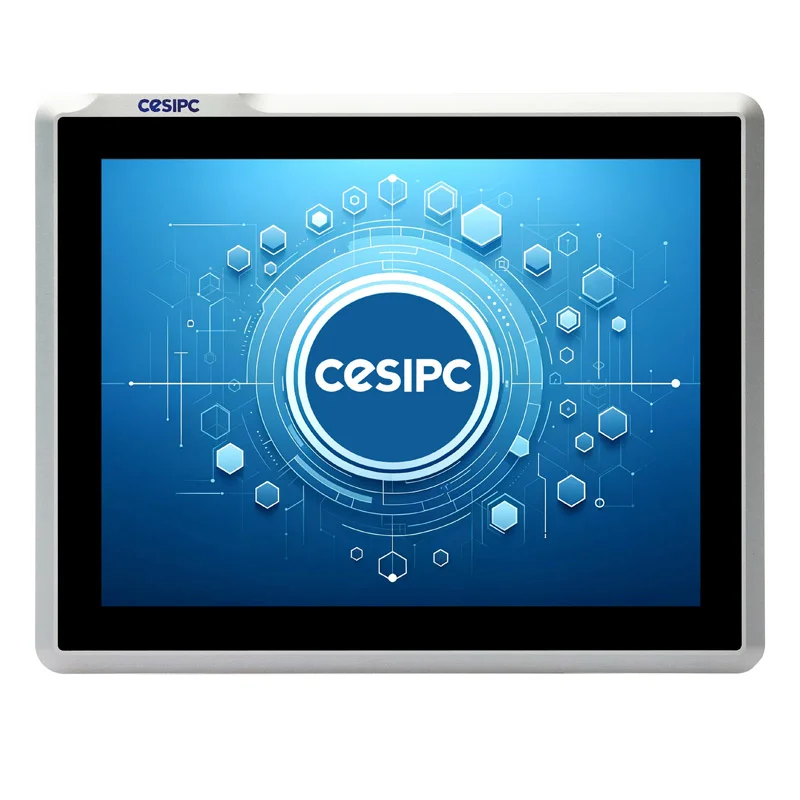
Panel PC (Industrial Panel PC)

For HMI and MES interfaces

Typical Roles

  • CNC operator HMI interface
  • Machine status visualization + parameter management
  • MES / production-system HMI terminal

Form Factor Traits

  • Industrial-grade touch display — for on-machine / shop-floor use
  • All-in-one integrated design — easy machine & system integration
  • Cooperative with the IPC, not a replacement
  • Low-harness internal architecture — resistant to electrical noise and vibration
  • FlexCore™ modular architecture — performance upgrades retain the same enclosure
CORE CHARACTERISTICS

4 Core Characteristics of CESIPC IPCs for the CNC Industry

01

Industrial Control-Oriented Form Factor

  • Optimized for electrical-cabinet installation
  • Single-side centralized I/O layout aligned with machine cabling
  • Supports wall-mount, DIN-rail and other industrial mounting
02

Expandability & Compatibility

  • PCI / PCIe expansion supported
  • Compatible with motion controllers and dedicated function cards
  • Multi-LAN + multi-COM interface combinations
03

Platform Control & Long-Term Supply

  • Industrial-grade motherboards
  • Platform version freeze support
  • Designed for multi-generation equipment lifecycle projects
04

System & Software Compatibility

  • Mainstream Windows / Linux operating systems
  • Compatible with real-time / quasi-real-time system requirements
  • Suited for PC-based CNC, supervisory control, MES nodes

PARTNERSHIP MODEL

How CESIPC Typically Engages in CNC Projects

Not short-term delivery, but long-term platform behavior inside the customer's system.

A

Define Platform Positioning

Work with the customer to define the role and positioning of the industrial PC platform within the overall system architecture.

B

Provide the Reference Platform

Select the appropriate reference form factor from both IPC and Panel PC product families.

C

System Validation + Freeze

Support platform-level system validation, version freeze, and long-term supply commitments.

D

Continuous Collaboration

Maintain long-term collaboration as the customer's product line evolves.

CNC PROJECT CONSULTATION

Have a CNC Project? Tell Us What You Need

Whether for CNC system validation, machine HMI integration or production-line MES rollout, our engineers will respond within 24 hours with a full solution, recommended models, quotation, and sample evaluation plan.

Call Get a Quote